


Scammers Are Meeting You Where You Are
Why the same scam can look different in your text messages, social media, phone calls, and online searches
Scams do not always arrive in an obvious form anymore. They increasingly show up in the places people use every day: an urgent text message, a friendly social-media direct message, a convincing phone call, or a search result that looks official. The goal is the same, to gain enough trust to get money, personal information, or access to an account but the method changes depending on where the scammer thinks it will work best.
At Nelson, Bryan, Boylen & Cross, we believe knowing how these messages are designed can help people slow down before a moment of pressure turns into a costly problem. This is especially important when a message involves your finances, government benefits, health information, insurance, or an urgent legal-sounding demand.
The New Scam Pattern Is Simple
Scammers are no longer using one message everywhere. They match the story to the place where you receive it. A text can feel urgent. A phone call can make someone feel put on the spot. A message on social media can feel personal. A sponsored search result can look like the quickest way to reach a real company.
Text or email: A toll, package, utility, bank, or account message that warns of a fee, suspension, or missed delivery and includes a link.
Social media: A giveaway, romance, investment, job, or friend-in-trouble message that tries to build familiarity before asking for money or information.
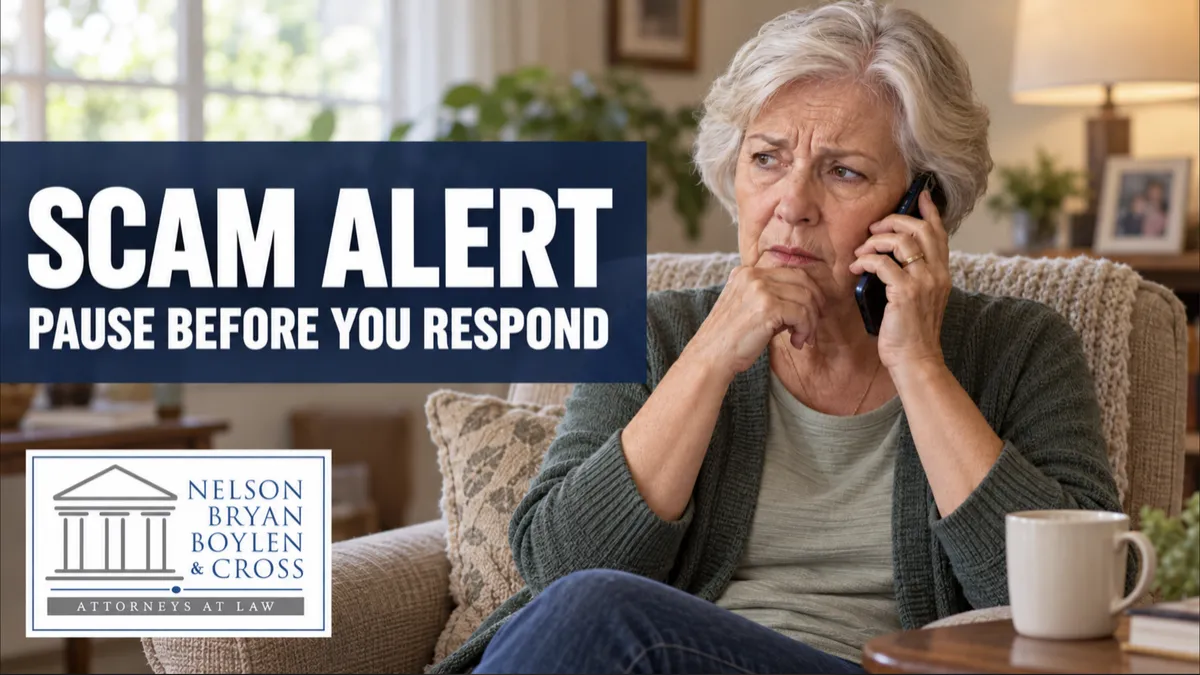
Phone calls: A caller claiming to be with the IRS, a bank, technical support, law enforcement, or another trusted organization who wants immediate action.
Web searches: A paid ad or look-alike site that appears when you search for a company customer-service number, login page, or support information.
That shift matters because a message can feel legitimate simply because it reached you in the right place. But the platform is not proof that the message is real.
A Familiar Name Does Not Make a Message Safe
Scammers commonly borrow the names of companies people already use and recognize. Google, Microsoft, Apple, Amazon, delivery companies, banks, utilities, and government agencies are frequent choices because most people have an account, a device, a package, or a bill connected to one of them. A recognizable logo or familiar name should prompt a careful check—not an immediate response.
The strongest warning signs are often less about spelling and more about pressure: a demand to act now, a threat of a fee or account closure, a request for a one-time verification code, a link you did not expect, or a caller who tells you not to hang up.
Take a Pause Before You Respond
Do not click a link or call a number included in an unexpected text, email, or direct message.
Go to the company’s official website yourself, or use a phone number from a statement, card, or known account page.
Do not provide passwords, PINs, payment information, or verification codes during an unsolicited call or message.
Be careful with sponsored search results. A paid listing can appear above the real company’s website.
Talk to someone you trust before paying, sending gift cards or cryptocurrency, or sharing sensitive information.
If You Think You Have Already Been Scammed
Act quickly, but do not panic. Contact your bank, credit-card company, or payment provider through a verified number and ask what steps are available. Change passwords for any affected accounts, especially if you reuse passwords. Save screenshots, receipts, phone numbers, emails, and any other details. You can also report the incident through the Federal Trade Commission at ReportFraud.ftc.gov and contact local law enforcement when appropriate.
If the situation has caused financial harm, involves identity theft, or includes a legal document, demand, contract, or threat you do not understand, speaking with an attorney may help you determine what options are available. Every situation is different, and no outcome can be promised.
A Message From Our Firm
Nelson, Bryan, Boylen & Cross serves individuals and small businesses throughout North Alabama. If you have questions about a situation that may involve fraud, financial harm, or a legal issue connected to a scam, you are welcome to contact our office. If your concern falls outside our practice, we can help you decide whether another resource or attorney may be appropriate.
Nelson, Bryan, Boylen & Cross Law Firm
1801 Corona Avenue
Jasper, Alabama 35501
Call or Text 24/7/365: (205) 387-7777
www.nbbclaw.com
This article is for general informational purposes only and is not legal advice. Reading it does not create an attorney-client relationship. No representation is made that the quality of the legal services to be performed is greater than the quality of legal services performed by other lawyers.
