



AI Scams Are Growing: How to Protect Yourself from Fake Downloads and Online Fraud
Artificial intelligence has become one of the most talked-about technologies in the world. Millions of people are downloading AI tools, experimenting with chatbots, and exploring new software designed to make work and everyday life easier.
Unfortunately, cybercriminals are paying attention too.
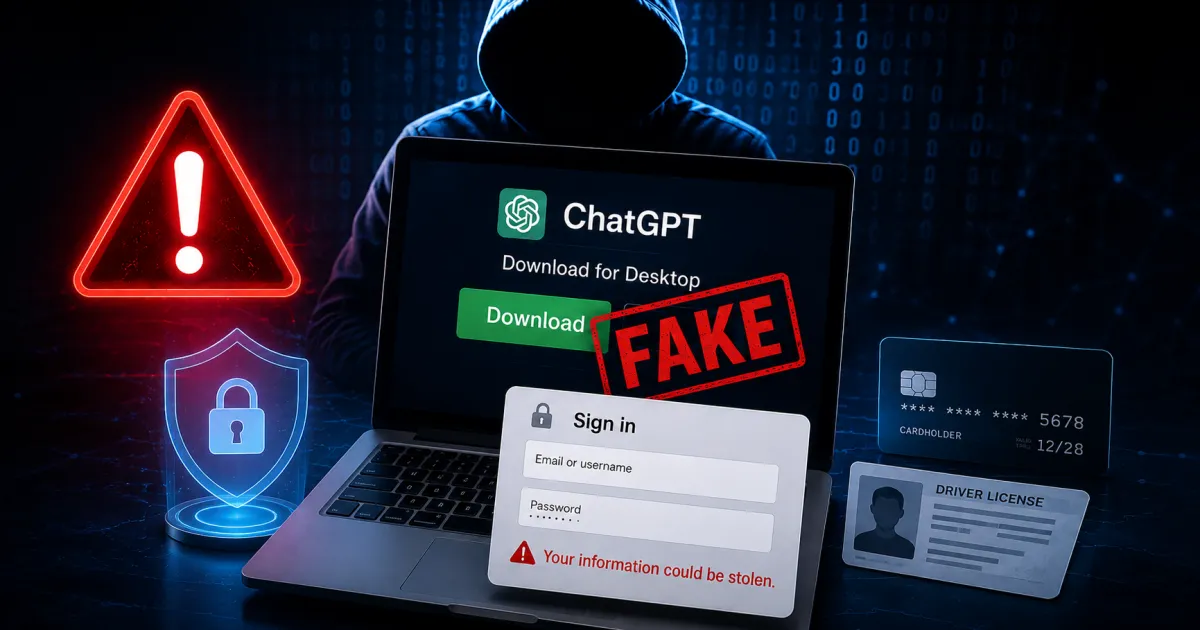
A recent security investigation revealed that criminals created a fake ChatGPT download website designed to look nearly identical to the real thing. Instead of downloading a legitimate application, unsuspecting users downloaded malware capable of stealing passwords, browser data, financial information, and even cryptocurrency assets.
While this particular scam involved ChatGPT, the larger lesson applies to everyone who uses the internet: scammers are increasingly using trusted brands and popular technology to trick people into giving away sensitive information.
What Happened?
Researchers discovered a fake website that closely copied OpenAI’s ChatGPT download page. The website appeared professional, used familiar branding, and even displayed the security indicators many users associate with legitimate websites.
Visitors who attempted to download ChatGPT from the fake site instead received malicious software.
The malware was designed to collect:
·Saved passwords
·Browser cookies
·Cryptocurrency wallet information
·Financial account information
·Email credentials
·Messaging application data
In some cases, the malware attempted to replace legitimate cryptocurrency wallet software with compromised versions controlled by attackers.
Why This Matters to Everyday People
Many people assume that scams only target large companies or individuals with significant technical knowledge.
That is no longer true.
Modern scammers often target ordinary consumers because they know people are busy and may not notice subtle warning signs.
A fake website today can look almost identical to the real thing. Criminals can copy logos, colors, layouts, and marketing language within minutes.
The result is that even careful internet users can be fooled.
The Padlock Doesn’t Guarantee Safety
One of the biggest misconceptions online is that a website is safe simply because it displays the padlock icon in the browser.
The padlock only means that your connection to the website is encrypted.
It does not mean the website itself is trustworthy.
Many scam websites now use legitimate security certificates because they are inexpensive and easy to obtain.
Before downloading software or entering personal information, always verify that you are visiting the official website.
Common Warning Signs of Online Scams
Scammers continue to evolve their tactics, but several warning signs remain common:
Unfamiliar Website Addresses
A website may look legitimate while using a slightly altered web address.
Always examine the URL carefully.
Pressure to Act Quickly
Scammers often create urgency to prevent people from thinking carefully about what they are doing.
Unexpected Downloads
Be cautious when websites immediately encourage software downloads without verifying legitimacy.
Requests for Passwords or Financial Information
Unexpected requests for sensitive information should always raise concerns.
Search Engine Advertisements
Not every advertisement displayed in search results is legitimate. Verify that you are visiting the official website before downloading anything.
What Should You Do If You Think You’ve Been Affected?
If you believe you may have downloaded software from a fake website, acting quickly can help reduce potential damage.
Consider taking the following steps:
·Change important passwords immediately.
·Enable multi-factor authentication where available.
·Monitor financial accounts for suspicious activity.
·Review cryptocurrency accounts and wallet activity.
·Scan devices for malware.
·Contact financial institutions if fraud is suspected.
·Notify your employer if a work device may have been affected.
The sooner action is taken, the greater the chance of limiting the impact of stolen information.
Why Online Fraud Is Becoming More Common
Technology has made many aspects of life easier, but it has also created new opportunities for criminals.
Today’s scammers can build convincing websites, automate attacks, and reach thousands of potential victims with very little effort.
Artificial intelligence has increased public interest in new software, creating opportunities for bad actors to take advantage of individuals who are searching for popular tools online.
As technology evolves, consumers must remain informed and cautious.
Protecting Yourself Moving Forward
The best defense against online fraud is awareness.
Before downloading software:
·Visit official websites directly.
·Verify web addresses carefully.
·Avoid unfamiliar download sources.
·Keep devices updated.
·Use reputable security software.
·Enable multi-factor authentication.
Small precautions can significantly reduce risk.
How Nelson, Bryan, Boylen & Cross Can Help
At Nelson, Bryan, Boylen & Cross, we believe informed consumers are better protected consumers.
While technology continues to evolve, scams, fraud schemes, and identity theft attempts are becoming increasingly sophisticated. Staying informed about emerging threats can help individuals and families protect their personal information and financial security.
Our goal is to provide useful information that helps people make informed decisions about issues that affect their daily lives.
Contact Nelson, Bryan, Boylen & Cross
1801 Corona Ave.
Jasper, AL 35501
(205)387-7777
